The architecture behind reliable end-to-end automation
KAPTO combines event-driven workflow logic, proven production components, and AI, where it adds value. So document-heavy processes do not stop at extraction but move all the way to execution.
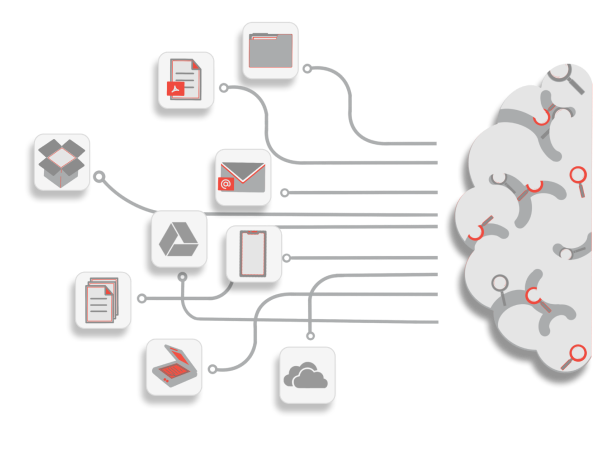
KAPTO combines event-driven workflow logic, proven production components, and AI, where it adds value. So document-heavy processes do not stop at extraction but move all the way to execution.
Most automation tools can help with isolated tasks. Very few are built to handle the full reality of operational work: fragmented inputs, exceptions, cross-checks, business rules, and downstream actions.
KAPTO has not been designed as a single-model tool or a surface-level assistant. It has been designed as an operational architecture that can understand inputs, validate decisions, and execute the next step in the workflow. That is what makes it usable in production, not just impressive in a demo.

KAPTO has been designed with distinct but connected layers: knowledge acquisition, decision, and execution. This separation makes the process more reliable, easier to govern, and better suited to real operational workflows than systems that try to solve everything in one step.

Not every knowledge-acquisition task needs AI. Not every decision needs the same kind of intelligence. KAPTO has been designed to use the best available approach for each step, from deterministic logic and rules to proprietary models and LLMs, depending on what the process actually requires.

Reliable automation needs more than intelligence. It needs validation, orchestration, and governance. KAPTO has been designed to reduce operational risk by combining interpretation with control, so processes remain traceable, reviewable, and stable as they scale.
KAPTO has been designed to do more than read documents. Its architecture separates knowledge acquisition, decision, and execution into distinct layers, then connects them within one governed operational flow. That is what allows KAPTO to turn messy inputs into reliable action in real business processes.

KAPTO receives information from the channels your business already depends on: emails, attachments, PDFs, scans, portals, APIs, and existing systems. There is no need to redesign the upstream reality of how documents and requests arrive.
KAPTO interprets content in context. It does not just extract isolated fields, the system identifies what the input means within the process, what kind of case it belongs to, and what information matters next. This is the knowledge acquisition layer: turning unstructured inputs into usable operational understanding.

Before any decision is made, KAPTO checks what it found against business rules, structured data, and other trusted sources. AI is used where interpretation is needed, but it is not left alone. Validation logic, fact-checking, and workflow controls help reduce error propagation, creating a more reliable basis for the next step.

KAPTO then determines the next-best action for the process. Some decisions can be handled through deterministic logic and rule-based workflows. Others require AI-supported judgment. KAPTO has been designed to use the right mechanism for the right decision, instead of forcing one technology everywhere.

Once the decision has been made, KAPTO moves the process forward. It can route work, trigger the next step, update systems, notify stakeholders, or support execution across the workflow. This is where the difference becomes clear: KAPTO has been built to automate end-to-end processes, not just isolated tasks.

KAPTO keeps the process visible, traceable, and under control. It supports operational monitoring, backlog visibility, and governed execution, so teams can see what happened, what requires attention, and how automation is performing over time.
Many AI tools can read, summarize, classify, or respond. That does not mean they can run a real process reliably from beginning to end.
Generic AI tools often perform well on isolated tasks, but struggle when workflows require multiple handoffs, cross-checks, decision logic, and controlled execution. Errors compound, confidence drops, and the process still depends on human supervision at every critical step.
KAPTO has been designed differently. Its architecture separates knowledge acquisition, decision, and execution into governed steps, combines AI with validation and business logic, and connects outcomes to real operational actions. It does not assume that one model, or even AI alone, should handle the whole process.

KAPTO follows a practical principle: use AI where it creates value, and rely on proven components where they are better suited to the task. Not every knowledge-acquisition task needs AI. Not every decision needs the same kind of intelligence. KAPTO has been designed to choose the right approach for each step, which makes automation more stable, easier to govern, and more realistic to deploy inside live operations.
This is why KAPTO does not depend on AI alone to carry the whole workflow. It combines intelligent interpretation with structured logic, validation, and orchestration. The result is a service architecture designed to deliver operational outcomes.



KAPTO extends capability around the systems you already use. Instead of forcing a heavy transformation inside core platforms, it operates where real operational friction happens: incoming communications, fragmented documents, human bottlenecks, disconnected inputs, and downstream actions.
That makes it possible to introduce automation incrementally, with lower disruption and clearer control. For technical validators, this matters: value can be added around existing architecture without requiring a risky core-system replacement project.
In regulated and operationally sensitive environments, capability alone is not enough. Automation must be reviewable, governable, and trusted.
KAPTO is built to support controlled execution through validation logic, workflow governance, and operational visibility. That means teams can understand what happened, why it happened, and what needs attention next - even as automation scales across larger volumes and more complex processes.

Track decisions, validations, and actions across the workflow

Apply business logic and operational guardrails where they matter

Reduce dependency on one model or one technical approach

Keep oversight of performance, backlog, and exceptions
BLOG ARTICLES
KAPTO is not a one-size-fits-all AI layer. It is a service architecture applied to real operational workflows. If you want to understand where it fits in your environment - and what it could automate end-to-end - let’s look at it together.