Start in Milan. An Italian policyholder wants to cancel their motor policy. Under the Codice delle assurazioni private, they must give written notice with proof of delivery. They send a PEC (Posta Elettronica Certificata), Italy's certified email system, established by Presidential Decree 68/2005 and mandatory for all businesses and professionals since 2013. The insurer is legally required to maintain a registered PEC address in the INI-PEC directory. They cannot refuse to receive it. They cannot ignore it. They must process it.
That single interaction (one policyholder, one cancellation, one certified message) is not a relic of analog processes waiting to be replaced. It is a legally mandated communication channel operating exactly as designed. And it is one of over 16 million PEC mailboxes active in Italy as of late 2024 (AgID official statistics).
This is the structural reality that "paperless insurance" narratives miss. As Gabriel De Dominicis, Kapto's MD & Head of AI, puts it: law mandates insurance, insurance mandates certified communication channels, and those channels mandate documents. The document flow in European insurance is not the residue of organizational inertia. It is the direct output of law. The insurance document processing challenges that European carriers face are not transitional; they are permanent features of how regulated communication works.
This has a direct consequence for the "AI will make documents irrelevant" argument: AI does not reduce the volume of documents that must be received and processed. It changes who does the processing. Automating the processor keeps the total addressable market for document processing the same size while moving it from manual labor to operational capacity. That shift is exactly what managed AI operations, delivered by digital workers rather than headcount, are built for.
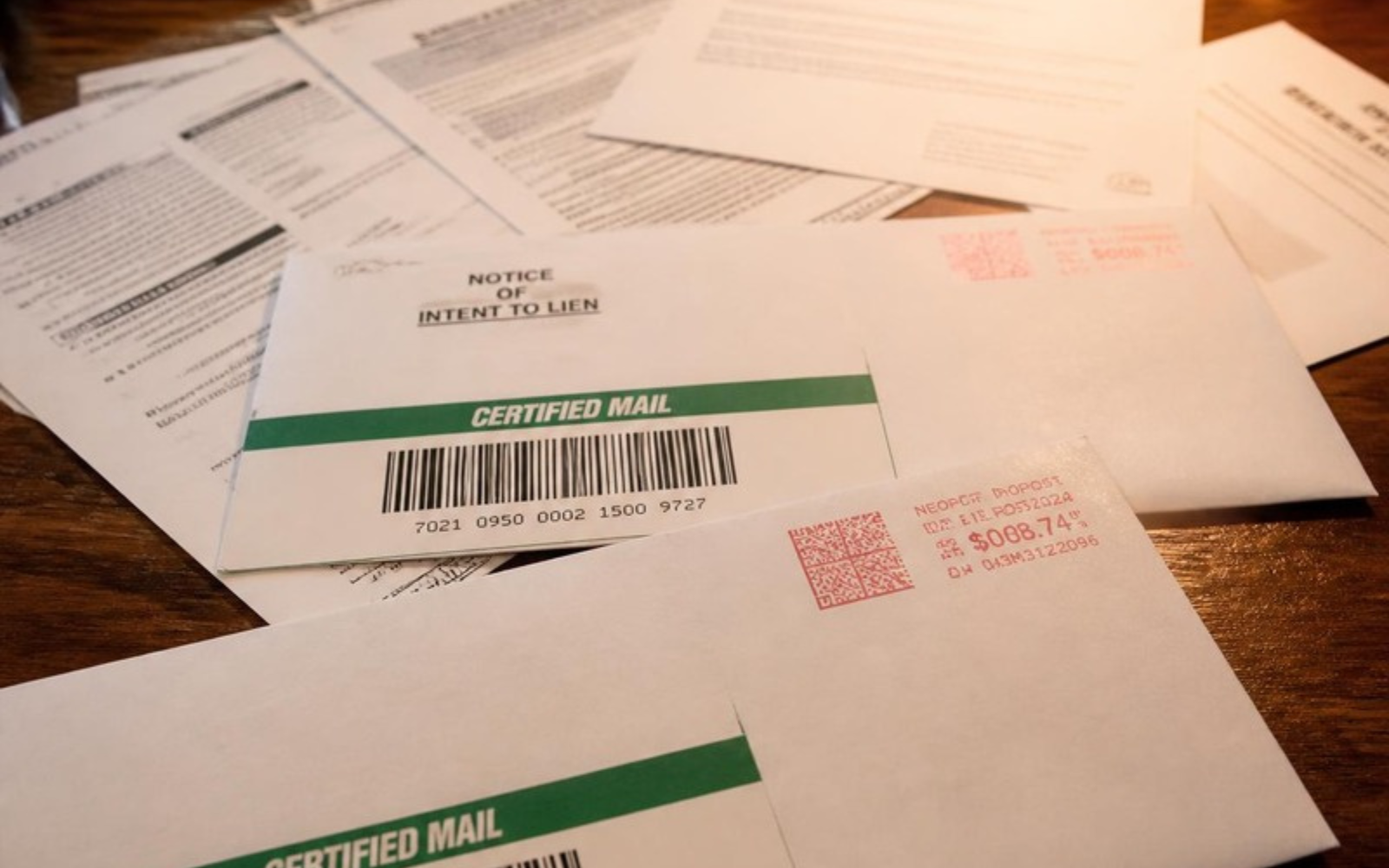
The certified mail infrastructure is expanding, not contracting
PEC is often cited in digital transformation discussions as a legacy system due for retirement. The opposite is happening.
Italy is currently migrating PEC to REM (Registered Electronic Mail), the eIDAS-compliant standard operating under EU Regulation 910/2014. REM is not a replacement that eliminates PEC's legal standing. It is a European standardization that extends the same certified-mail logic across borders. What was an Italian infrastructure is becoming a pan-European one.
The EU's eIDAS (electronic Identification, Authentication and Trust Services) framework, and its successor eIDAS 2.0, is strengthening electronic trust services, not dismantling them. Cross-border certified mail between member states is coming. The volume of document flows that must travel through certified channels is growing. The "certified mail problem" European insurers face today is smaller than the one they will face in five years.
Five jurisdictions, one pattern
Every major European insurance market has a statutory framework that forces certain communications through written, provable channels. The specific mechanism varies; the underlying requirement does not.
Germany. De-Mail has been in force since 2011, governed by the De-Mail Act. BaFin (the Federal Financial Supervisory Authority) requires regulated entities to accept written communications. Policy cancellations, claim disputes, and legal notices require formal written form under German law.
France. Lettre recommandée électronique (LRE) operates under France's transposition of eIDAS. The Code des assurances mandates written-form acceptance for cancellations, claims, and disputes. La Poste's AR24 is the primary LRE provider.
Spain. The DEHú (Dirección Electrónica Habilitada Única) is the unified electronic notification system. Insurers must accept certified electronic notifications through it.
United Kingdom. Royal Mail Signed For and Special Delivery remain the legal default for formal insurance communications. The Financial Conduct Authority (FCA) requires firms to maintain accessible written communication channels.
EU-wide. The eIDAS Regulation creates a pan-European framework for qualified electronic registered delivery. Every member state has transposed it. Every regulated insurer operates within it.
What the law requires in writing
The following table covers the communication types that require written form, and the jurisdictions where that requirement applies.
None of these communication types have a near-term digital bypass. Courts require evidentiary channels. Third-party bodily injury claims are lawyer-driven by nature. Broker submissions for commercial and specialty lines require bespoke documentation. Regulatory correspondence has its own formal requirements independent of any insurer's digital preferences.
The broker channel adds structural complexity
For most European commercial insurers, the broker channel is simultaneously the highest-volume inbound source and the least standardized. Brokers are independent businesses. They use different systems, different submission formats, different communication methods. Digitizing the broker relationship requires coordination across thousands of counterparties, each with their own operational reality.
This is not a short-term coordination problem. Lloyd's Blueprint Two, the market's most resourced digitization initiative, has been in progress for over a decade with what industry observers estimate at hundreds of millions in investment, and remains incomplete. Continental broker markets in Italy, Germany, and France are less digitized than London. The broker channel's document dependency is structural, not transitional.
As one benchmark for the total cost: the average insurer spends $1.5 million per year on paper-based mail processing alone (Iron Mountain, cited via ibml). That figure covers only the mail processing layer, not the downstream classification, routing, and data extraction work that follows every inbound document.
What can actually be reduced
Honest analysis requires distinguishing what is legally mandated from what is organizationally habitual. Some document flows are moving digital.
The pattern is consistent: the document flows with genuine reduction potential are concentrated in personal lines, renewal, and payment. The document flows that are structurally permanent are concentrated in claims, legal, broker, and regulatory communication. These are not equivalent in complexity or volume. A PEC-delivered claim dispute from a policyholder's lawyer, with supporting medical documentation and a formal appeal, requires substantially more processing than a digital renewal confirmation.
The "AI will eliminate this" argument gets the logic backwards
A common counter-argument runs as follows: AI systems can now read, classify, and extract data from documents at scale, which makes the document volume irrelevant because humans won't have to touch it.
This argument is correct about AI capability and wrong about the conclusion. AI processing documents does not reduce the volume of documents that must be received and processed. It changes who does the processing, from humans to AI systems. The total addressable market for document processing does not shrink because the processor is automated; it shifts from manual labor to operational capacity.
The 300 million-plus EU adults holding household or vehicle insurance (per the EIOPA Eurobarometer 2025) generate claims, cancellations, disputes, and renewals at a rate that is not declining. The document processing question is not whether to process this volume (law requires it) but what kind of capacity processes it.
This permanent document flow is exactly why execution-grade AI operations exist. The inbound channel is not going away; the organizations that process it most reliably hold the operational advantage. The data-readiness excuse, that internal systems must be cleaned up before AI can operate, does not apply to inbound perimeter documents, which arrive from counterparties in formats the insurer cannot control, as the DORA and data-readiness analysis demonstrates.
eIDAS REM: standardization as signal
The migration from PEC to REM is worth examining closely because it is frequently misread as a deprecation signal. It is the opposite.
eIDAS REM creates an interoperable standard for registered electronic delivery across all EU member states. An Italian PEC communication to a German insurer, currently requiring translation across national systems, becomes possible within a single framework. The certified mail infrastructure becomes more capable, not less relevant.
Insurers who interpret eIDAS REM as a sign that document volumes will decline are reading the regulatory direction incorrectly. The EU is building infrastructure for more certified electronic communication, with legal equivalence to registered mail, across 27 member states. The baseline for what constitutes a legally valid, provably delivered communication is being raised, not lowered.
Frequently asked questions
Why can't insurers refuse certified mail and direct customers to digital channels?
They cannot, legally. In Italy, insurers must maintain a registered PEC address in the INI-PEC directory and are prohibited from refusing PEC communications. The same applies to De-Mail in Germany and LRE in France. An insurer that redirected a policyholder away from their legally available certified channel would be in breach of regulatory requirements.
Does the "paperless insurer" exist?
No. Every licensed insurer in the EU must accept legally mandated written communications: claim notifications, policy cancellations, legal notices, regulatory correspondence, and broker submissions. Some personal lines document flows are moving digital (app-based FNOL, digital renewals), but the structurally permanent categories (claims, legal, broker, regulatory) are the complex, high-volume ones.
Is this problem specific to legacy carriers, or does it affect digital-native insurers too?
It affects every licensed insurer in EU jurisdictions, regardless of founding date or technology stack. A digital-native insurer writing motor policies in Italy must maintain a PEC address, accept PEC communications, and process them. The legal requirement does not have a digital exemption.
Will eIDAS 2.0 reduce document volumes?
No. eIDAS 2.0 strengthens electronic trust services and extends interoperability across EU member states. It does not weaken certified mail requirements. The trajectory of European regulation is consistent: expand legal equivalence for certified channels, increase cross-border interoperability, raise the baseline for provable delivery. Document volumes will grow, not shrink.
Does AI eliminate the insurance document processing challenge?
AI changes who processes the documents, not whether they get processed. Automating the processor keeps the total addressable market for document processing the same size while moving it from manual labor to operational capacity. The question is not whether to process the volume, but what kind of capacity processes it.
How does certified mail processing work at scale?
At scale, certified mail processing means hundreds or thousands of certified messages per day, each carrying legal weight. The challenge is not receiving them (that part is automated) but classifying and extracting actionable data from variable-format content: a delivered claim dispute may include a formal letter, medical reports, and legal notices, all in different formats.
How many documents does a typical European insurer process?
Volume depends on the insurer's size, lines of business, and geographic footprint. The average insurer spends an estimated $1.5 million per year on paper-based mail processing alone (Iron Mountain/ibml data), before any downstream classification, routing, or extraction. Over 300 million EU adults hold household or vehicle insurance (EIOPA Eurobarometer 2025), generating claims, cancellations, disputes, and renewals at rates that are not declining.
The permanent document flow described here is exactly the operating condition managed AI operations are built for. Kapto’s Digital Workers have processed over 10,000,000 insurance pages across European jurisdictions, at per-page pricing, six-week deployment, over 95% accuracy with confidence-calibrated uncertainty. The documents are not going away. The question is whether your capacity to process them scales with volume or with headcount. See how it works.